Mamoru Hosoda’s “The Boy and the Beast” and the triumph of fatherly love over darkness

Director Mamoru Hosoda’s The Boy and the Beast (バケモノの子) follows the story of an orphaned 9-year-old named Ren who meanders through a back alley in Tokyo’s Shibuya district and stumbles upon “Jutengai”, an alternate universe populated by humanoid beasts, where he is taken under the wing of a powerful warrior-beast named Kumatetsu, the undisciplined heir to Jutengai’s throne, who needs an apprentice in order to prove himself to Jutengai’s soon-to-be-reincarnated lord (a humanoid rabbit-like creature who is both seemingly naive, yet surpassingly wise). Ren is made to help Kumatetsu develop the discipline necessary to defeat his (Kumatetsu’s) refined and wildly popular rival, Iozen, thereby becoming the new ruler of the land.

the-boy-and-the-beast-featured

*Spoilers ahead*

The Boy and the Beast is not your simple fantastical fairytale; although it incorporates elements of a traditional children’s fable, it is rife with rich thematic significance, and is, above all, a profound commentary on the nature of man. The reason the world of humans and of beasts are separated from one another is not due primarily to differences in appearance – though that probably plays some part – but that human beings have a concealed, yet pervasive darkness in their hearts that threaten to consume them when tapped, and are thus too fragile to dwell in the land of the beasts. Understandably, the beasts are reluctant to allow Ren to remain in Jutengai in fear of the darkness in his heart, but the lord of Jutengai permits it. Here we begin to consider the idea of a darkness that is not only exclusive to the human race, but that also wields a terrifying and potentially all-consuming power.

Kumatestu and Ren are similar in that they were both abandoned by their parents/guardians at a young age; as a result, they are immature, self-centered, in desperate want of attachment and love – though neither of them can translate that longing into words – and alone. As they attempt to navigate their new master-apprentice relationship, they communicate exclusively through petty fights and boorish tirades. Ren begins his discipleship doing simple household chores like cooking and cleaning, but in the meantime – without Kumatestu’s knowledge – he watches Kumatestu train in the front yard, studying his form. Ren learns to mimic Kumatestu’s movements, eventually becoming familiar enough with Kumatestu’s footwork to challenge his master and gain his approval.

maxresdefault

As Ren recognizes Kumatestu’s impressive strength and determination beneath his brutish exterior, Kumatetsu in turn recognizes Ren’s perseverance, quick-wittedness, and willingness to grow. Over the course of 8 years, Kumatestu and Ren grow stronger and more mature – as warriors and as relational beings – entering into a relationship embodying that of father and son, united by a love that transcends their two worlds.

Again by chance, Ren returns to the human world and meets a female high school student named Kaede, who offers to help prepare him for college examinations and becomes his first human friend/romantic interest. He also discovers the whereabouts of his father, whom he tracks down – their reunion is one of many mixed emotions, but joyous nonetheless. Ren returns to Jutengai, only to have a falling out with Kumatetsu, who is unhappy with Ren’s newfound attachment to the human world. The two fight, and Ren leaves Jutengai, his relationship with his master fractured.

Back in the human world, Ren begins to struggle to reconcile his dual identity as the son of a human and child of a beast, and he is confronted for the first time since childhood by the darkness bubbling within him. Confused, disoriented, and overwhelmed, he lashes into a sudden fit of rage. Fortunately, he runs into Kaede, who quickly wraps her arms around him to calm his bewildered spirit, and as she holds him says: “I too am sometimes in so much pain that I don’t know what to do… No matter what I do, it feels like something is going to burst inside of my chest. It’s not just you. It’s not just me.”

Screen Shot 2020-04-18 at 11.50.01

Once he is reassured and regains control his senses, Kaede ties a red string around his wrist to act as a reminder that he is not alone, that he is loved, and that he is safe in her embrace.

Screen Shot 2020-04-18 at 11.51.43

The fateful battle between Kumatetsu and Iozen that the beasts of Jutengai have long been preparing for arrives. Due to his falling out with Ren, Kumatetsu is distracted and is easily overpowered by Iozen. But just as Kumatetsu is on the verge of defeat and all appears lost, Ren – as disciple, as training partner, as faithful son – appears, and he rallies Kumatetsu to victory.

Iozen respectfully accepts loss, but his eldest son, Ichirohiko, who is mentioned briefly throughout the story, is infuriated by his father’s defeat. In the center of his chest appears a menacing, gaping hole – a physical manifestation of the darkness in his heart – that writhes like a whirlpool in the sea. We realize that he, like Ren, is human, thus susceptible to his inner darkness in the land of the beasts.

Using the darkness’ power, he launches a sword through Kumatetsu’s chest. Inflamed by the (supposed) death of his master and friend, the darkness within Ren ignites and nearly swallows his body whole. But at the last moment, Ren sees Kaede’s charm around his wrist, and he immediately regains control of himself and the darkness. Here, we begin to unpack the answer to the big question of both the film and our existence in a broken, distorted world:

What holds the power to overcome the darkness?

Here, in Kaede’s charm, we see that part of the answer is none other than love.

Screen Shot 2020-04-18 at 11.17.10

However, though the thought of love rescues Ren from his own darkness’ grasp, it is not enough to eradicate the darkness that consumed Ichirohiko’s body and that is now hungry for Ren’s demise. Ren returns to the human world to find Ichirohiko and engages him in a final battle.

Although he fights his hardest to hold his own, Ren is forced to accept the fact that the darkness is too great and, if not eradicated, will kill everyone in the vicinity, including Kaede. So Ren once again reveals the terrible hole in his chest and begins to pull Ichirohiko’s darkness into himself, knowing it will result in his utter annihilation, but believing it to be the only solution.

thumb-1920-603606

Just as he is about to be overtaken, however, help arrives in the form of a flaming sword – Kumatetsu, who, choosing to give up his life in order to save Ren’s, reincarnated into a god in the shape of a sword. The sword, or Kumatetsu, then enters the hole in Ren’s chest in place of the darkness and seals itself within the hole, reviving Ren with newfound courage, confidence, and strength, and together Kumatestu and Ren defeat the darkness and save the world.

Screen Shot 2020-04-18 at 11.20.22

Finally, the parallel between the solution to the problem of darkness in their world and in that of our own becomes strikingly clear.

As The Boy and the Beast emphasizes time and time again, all of us have darkness in our hearts, and we all have the potential for great evil, whether or not we choose to admit it. This darkness seethes, almost imperceptibly at times, within our mind, body, and soul, seeking for an opportunity to swallow us whole. It permeates our thoughts, our behavior, and our world. And just as the film rightfully illustrates, we cannot defeat it by our own strength. We are fragile and weak creatures, struggling to survive in an imperfect and corrupted world.

It’s simple – we need help.

And by the grace of God, help came – in the physical manifestation of our creator and King, Jesus Christ, the only human to not hold darkness in his heart, who gave up his life to rescue us from the death we were destined for as a consequence of our sinful nature, of the darkness within us. When we profess Jesus as Lord and Savior, he takes up residence in our hearts, and the indwelling presence of our savior is, like the sword sealed within Ren’s heart, a guarantee of our eternal salvation and a reminder of our safety, security, and strength in our perfect Father and friend. In and through Jesus’ sacrifice on our behalf, we too reign victorious over sin and death. (John 14:20, Galatians 2:20, Revelation 3:20)

The Boy and the Beast was not (as far as I know) written to allude to Christianity, (in fact, it is riddled with elements contrary to Christian doctrine, including polytheism and reincarnation), but the gospel themes throughout the film are nevertheless evident, pointing to our broken human condition and our need for a perfect savior of light and all-consuming love.

17 so that Christ may dwell in your hearts through faith. And I pray that you, being rooted and established in love, 

18 may have power, together with all the Lord’s holy people, to grasp how wide and long and high and deep is the love of Christ, 

19 and to know this love that surpasses knowledge—that you may be filled to the measure of all the fullness of God. 

20 Now to him who is able to do immeasurably more than all we ask or imagine, according to his power that is at work within us, 

21 to him be glory in the church and in Christ Jesus throughout all generations, for ever and ever!

Amen.

– Ephesians 3:17-21

“Paris” – Exploring the City via 40 Haiku Poems

Paris is often represented by its famous historical and cultural landmarks which, though rightly deserving recognition and esteem, do not – in my opinion – provide a comprehensive, holistic picture of the city, as its boundaries stretch far beyond its illustrious center.

William Hart, Los Angeles based poet and fiction author, would likely say the same. Via his collection of 40 contemporary haiku, appropriately titled “Paris,” Hart seeks to capture the city’s essence through observations of ordinary moments that’d otherwise go unnoticed, to tell a broader, more expansive story of the city’s quirks and quintessential qualities.

IMG_E1431

IMG_E1432

Told from the perspective of an observant and attentive tourist, “Paris” leads the reader on a stroll through the city – from the Seine, to Napoleon’s tomb, to Rue Pigalle and onward, while commenting on the little things that are just as “Parisian” as the Eiffel, like a “sunlit planter” or “two dozing cats ring[ing] a tree.” Permeated by Hart’s love and ardor for the city, the haiku are written and illustrated not only with purpose, but with affection, tenderness, and warmth, granting readers a pleasurable and satisfying “tour.”

IMG_E1435IMG_E1437IMG_E1436IMG_E1439IMG_E1438

The final haiku paints an image of twinkling lights, pulsing to the heartbeat of a city that is for many a tourist stop, but to others home.

IMG_E1440

“still light, still shadow” – a Staple-bound Selection of Tiny Poems

For one weekend every April, the University of Southern California in Los Angeles hosts one of the most significant literary events of the year: the Los Angeles Times Festival of Books. Birthed in 1996 to promote and celebrate literacy, the festival features vendors, authors and publishers ranging from popular to obscure.

Several years ago I had the pleasure of attending the festival. Navigating my way through the bustle of vendors and kiosks and pop-up book stores, I happened upon a stand selling poetry collections influenced by contemporary haiku. Here I found still light, still shadow, which – with its modest, unfussy design – looked as if it’d been put together by hand. Kevin Hull’s collection of “tiny poems” has since become an indispensable addition to my traveling bookshelf.

IMG_E1426

IMG_E1430

The haiku is a traditional form of Japanese poetry consisting of 17 syllables with three phrases of 5, 7, and 5 syllables. Though modern haiku stray from the traditional, Kevin Hull’s poems remain markedly true to traditional haiku by bearing the same characteristics, including what is known in Japanese as “kiru,” or cutting – a juxtaposition of two images or ideas – and “kigo,” a reference to season. A humble celebration of the cycle of life, Hull’s poems juxtapose death and decay with rebirth, restoration, and the promise of new life.

IMG_E1428

True to the essence of haiku, Hull’s poems utilize briefness to capture the beauty, complexity, and emotional energy of a single – often overlooked – moment or occurrence. Though restricted to tiny parameters, Hull’s careful selection of words paints vivid and dynamic images slow to fade, evoking a specific emotional response one might describe as reflective, pensive – a meditation on the consequences of a seemingly inconsequential point in time. Still light, still shadow is not only a masterful example of contemporary haiku, but a thoughtful and reverent observance of nature and our relationship to it.

IMG_E1427

(For further reading on how to write a haiku, stop by this site.)

“Flower Fables” – Louisa May Alcott’s Little-known Children’s Book of Fairy Tales

I think it’s safe to assume most American readers have heard of Louisa May Alcott. Her novel, Little Women, wooed audiences of all ages at the time of its publication and has since become immortalized in history as one of America’s most beloved books. It’s no surprise that many a reader recognizes Alcott as author of the esteemed bildungsroman that bears her name – not as author of a book of fairy tales (which happens to be her first published work).

9160OMADXCL.jpg

I discovered Flower Fables on accident several summers ago, scouring my parents’ book shelf in search of something to read for the week. The title, lettered in gold and etched into the book’s navy blue spine, caught my eye. Intrigued, I retrieved the book from the shelf. I opened to the first page and was surprised to see Alcott’s name printed beneath the title, since I – like most people familiar with her name – only knew of her Little Women series.

IMG_E1419

Turning the page, I was greeted by the following poem – a fitting introduction to the tales that follow:

IMG_E1420
“Pondering shadows, colors, clouds
Grass-buds, and caterpillar shrouds
Boughs on which the wild bees settle,
Tints that spot the violet’s petal.”

On the following page, the Table of Contents lists nine titles that hint at each fairy tale’s quaint, fanciful quality and childlike whimsy, like “The Frost King: or, The Power of Love,” and “Eva’s Visit to Fairy-Land.”

IMG_E1422

The tales take place within a fictitious and elaborately imagined magical fairy kingdom. The land is inhabited by a wide variety of mythical creatures, from fairies to elves to wintery spirits.

b026698bae3324adc4bf1f1f45472ef7.jpg

IMG_E1423

The stories often revolve around the fairies who, due to their altruistic nature and charitable spirit, are tasked to restore morality and order to neighboring lands corrupted by leaders whose hearts have been tainted by power. Ultimately, no matter the obstacle, the creatures who stand steadfast to what is good and right and noble unfailingly reign victorious over evil.

frost-king

In addition to well-written plot lines with a classic, morally-upright happy ending, Alcott’s vivid, intricate descriptions of the fairy kingdom and its lovable, wholesome creatures make Flower Fables a worthwhile read. I recommend Flower Fables not only to long-time fans of Alcott’s, but to anyone who enjoys a lovingly written fairy tale about valiant mythical creatures, the glory and splendor of nature untouched by man, and the defiant triumph of good over evil, or for those who are tempted to wonder if perhaps an idyllic, magical realm does exist somewhere beyond the reach of human exploration.

“The morning sun looked softly down upon the broad green earth, which like a mighty altar was sending up clouds of perfume from its breast, while flowers danced gayly in the summer wind, and birds sang their morning hymn among the cool green leaves.”

– from “Eva’s Visit to Fairy-Land.”


“A Velocity of Being” – an Extensive Compilation of Letters on the Act, Art, and Adoration of Reading

As an avid reader and long-time fan of Maria Popova’s BrainPickings.org – an extraordinary collection of reflections on the beauty of existence and what it means to be human – I learned about the prospective arrival of Popova’s book, affectionately deemed her “labor of love:” A Velocity of Being – Letters to a Young Reader.

Eager to secure a copy before the first set sold out, I preordered the book as soon as the link went up. I knew next to nothing about the book’s contents since there were no reviews available, but my decision to purchase the book was driven more by a desire to support Popova’s passionate devotion to safeguarding the art of reading than by the book itself. That said, the book has surpassed my expectations, and I can say with full assurance that I will treasure Velocity for the rest of my life.

IMG_1369

IMG_1391

Velocity includes 121 letters from “…philosophers, composers, poets, astrophysicists, actors, a 98-year-old Holocaust survior, Italy’s first woman in space, and many more remarkable humans whose splendor of spirit cannot be contained in the shorthand descriptors we often use to condense a person’s character and cultural contribution…”
The letters vary in length, tone, and style – some are a full page long, others a paragraph; some are serious, others light-hearted – but they are all inherently alike in that their authors detail how books have changed their life for the better. The authors talk of books like real, intentional people with hearts and hopes and desires – who know the authors intimately, who speak to the deepest parts of their souls, and who never fail to offer a place of solace, comfort, consolation, and peace. The 121 authors urge you, the young reader, to read, and keep reading – not because reading is an essential life skill (though it is), but because reading is an invaluable and incomparable gift with the power to heal, embolden, and empower.
One of my favorite letters is by Alain de Botton, a Swiss-born British philosopher and author, in which he likens a good book to a faithful and dependable companion:

Dear Reader,

We wouldn’t need books quite so much if everyone around us understood us well. But they don’t. Even those who love us get us wrong. They tell us who we are but miss things out. They claim to know what we need, but forget to ask us properly first. They can’t understand what we feel-and sometimes, we’re unable to tell them, because we don’t really understand it ourselves and to others, and make us feel less strange, less isolated, and less alone. We might have lots of good friends, but even with the best friends in the world, there are things that no one quite gets. That’s the moment to turn to books. They are friends waiting for us any time we want them, and they will always speak honestly to us about what really matters. They are the perfect cure for loneliness. They can be our very closest friends.

Yours,

Alain

As if 121 beautifully written letters by some of the most influential figures of the century were not enough, each letter is accompanied by truly praiseworthy works of art, which I believe to be just as valuable as the letters they bring to life.

IMG_1372
Art by Albertine
IMG_1371
Art by Cecilia Ruiz

“A text is a trail of its writer’s imagination. It is the remnant of one planet being found by another (you). & if there are diamonds here, dear reader, it is because you made them.

– Aracelis Girmay

IMG_1393
Art by Jenni Desmond
IMG_1394
Art by Tallulah Fontaine

“I want to tell you something interesting about reading books. It’s that books are about possible worlds-not just the worlds we know well. They goad us to go beyond the familiar, to consider not just the here-and-now but the might-be.”

– Jerome Bruner

IMG_1392
Art by Nahid Kazemi
IMG_1395
Art by Sophie Gilmore

“So long as you have books to read and time and attention to give them, you will never be lonely, and your mind will always be free.”

– Maria Bustillos

IMG_1396
Art by Judith Clay

As Popova states, A Velocity of Being is “…an atlas of possibility for the land of being mapped through the land of literature.” I have no doubt that Velocity will arouse and inspire readers – young and old – to pick up a book, delve deep into its pages, and let themselves be transported to a world unlike their own.

IMG_1370

(Unfortunately, the price of the book has substantially increased since I purchased it in December, but here’s the link for those who are interested.)


“Cottonmouth and the River” – A Thoughtful, Refreshing Analogy of Christianity

img_1334

I believe well-written children’s stories are one of mankind’s mightiest tools. They possess an otherworldly power to capture the imagination and challenge readers to step beyond the boundaries of their minds. Many of my favorite stories deal shrewdly with a complex, challenging concept by crafting it into something both accessible and largely comprehensible.

Along this vein, C.S. Fritz’s Cottonmouth and the River is a quintessential example of a children’s story that’s also an intricately involved, meticulously crafted analogy. Although this fantastical tale largely revolves around a lonely little boy and a tender-hearted beast, it is at the same time a representation of the foundations and widely misunderstood truths of Christianity.

The story opens with an introduction to its 10-year-old protagonist, Freddie, who lives alone in a great big house. The whereabouts of his parents are left unexplained. Deprived of a family, Teddie is without companionship and wanting for love.

img_1336

One day, on another of his daily walks to a river nearby, Freddie discovers a curious black egg. Fascinated by the egg’s shiny exterior and mysterious origins, Freddie takes the egg home with him. That evening, a strange beast named “Tug the Comforter” – whose gruff, yet friendly appearance bears resemblance to the creatures of “Where the Wild Things Are” – magically appears in Freddie’s home.

img_1337

Of the egg, Tug explains: “Whatever you could possibly want to do, whatever you could possibly imagine… the egg will provide.”

Tug reveals that the egg was gifted to Freddie by the river. Aware of the pain in Freddie’s heavy heart, the river decided to bless Freddie by granting him with “new life.” While Freddie is allowed to do whatever he wants with the egg, Tug emphasizes to Freddie the only stipulation: he must not eat the egg.

Likely in an endeavor to fulfill every one of Freddie’s wild and whimsical childhood dreams, the unlikely companions partake in all sorts of adventures via the power of the egg: together Freddie and Tug soar above the clouds, feast upon a boundless amount of dessert atop a candy-adorned cliff, scuba dive with angler fish, and grow facial hair.

img_1338

However, despite having finally attained a taste of interminable joy, Freddie’s hope for his parents’ return looms over his head like a storm cloud. Driven by the dissatisfaction he associates with their absence, Freddie makes a devastating decision that is met, as we would expect, with dire consequences for Freddie.

While the story is largely reminiscent of Christian themes prior to this point, here is where the analogy to Jesus Christ and his sacrifice on the cross becomes astoundingly clear: although Freddie deserves to be punished for his decision, Tug the Comforter bears the full burden of the consequences in Freddie’s place.

img_1339

Through Freddie’s weakness and Tug’s response, C.S. Fritz draws attention to the significance of grace, the meaning of unconditional love, and the relationship between creation and Creator, while celebrating the hope that we have in our Comforter. A story of joy, sorrow, and sacrificial love, Cottonmouth and the River is both a tender and poignant illustration of the gospel message – the foundation of Christian faith.

img_1340

Cottonmouth and the River is thought-provoking, beautifully designed, and well-worth a read; it is also the most impressively illustrated analogy of the gospel I’ve ever had the pleasure of coming across. I highly recommend this stunning treasure to religious and non-religious readers alike.

“Flowers are the expression of God’s love to man…” – An Examination of Flowers by Joseph Beck

“Flowers are the expression of God’s love to man. One of the highest uses, therefore, which can be made in contemplating these beautiful creations, in all their variety and splendor, is that our thoughts and affections may be drawn upwards to Him who has so bountifully spread over the face of the whole earth such a vast profusion of these beautiful objects as tokens of His love to us. The more we examine flowers, especially why the eye is assisted by the microscope, the more we must adore the matchless skill of the Great Supreme. We must be ungrateful indeed not to acknowledge His unspeakable goodness in thus providing so liberally for the happiness and pleasure of His children here below.”

– Joseph Beck

tulip-flowers-illustration.jpg


I copied this quote from a collection of poems, quotes, and essays on the beauty and restorative properties of a garden, which you can read more about here.

For Every Lover of Gardens – on Gail Harvey’s Heartwarming Compilation of Love Letters Addressed from Man to Nature

As a long-time suburbanite and recent city-dweller, the world I know is a winding valley of buildings colored brown and grey. Though I’ve grown accustomed to living in urban areas (and, admittedly, would not survive without the conveniences most cities have to offer), I eventually grow fatigued, weary of walking beneath sky rises that seem to stretch upwards without end, and of the ongoing stream of traffic that sounds of horns and screeching tires and of passersby with their heads in the future, and of the lights that never go out but glare on and on into the night… and I yearn to stand in a field of flowers in bloom.

img_1291

Intimacy with nature touches the heart in a way no other earthly thing can, so when I find myself longing to be liberated from the cold hand of industrialization, I look for a garden. Apart from the noise of the city, the cacophony of business, in a garden I’m altogether at peace and exquisitely satisfied. To be in a garden conjures a feeling all at once refreshing, pleasant, and sweet – like a bite of fresh bread with homemade jam, a long overdue conversation with an old friend, cool mist on the cheeks after a long walk in the heat. A stroll through a garden on a warm afternoon is often all that I need to be soothed and revived.

img_1285

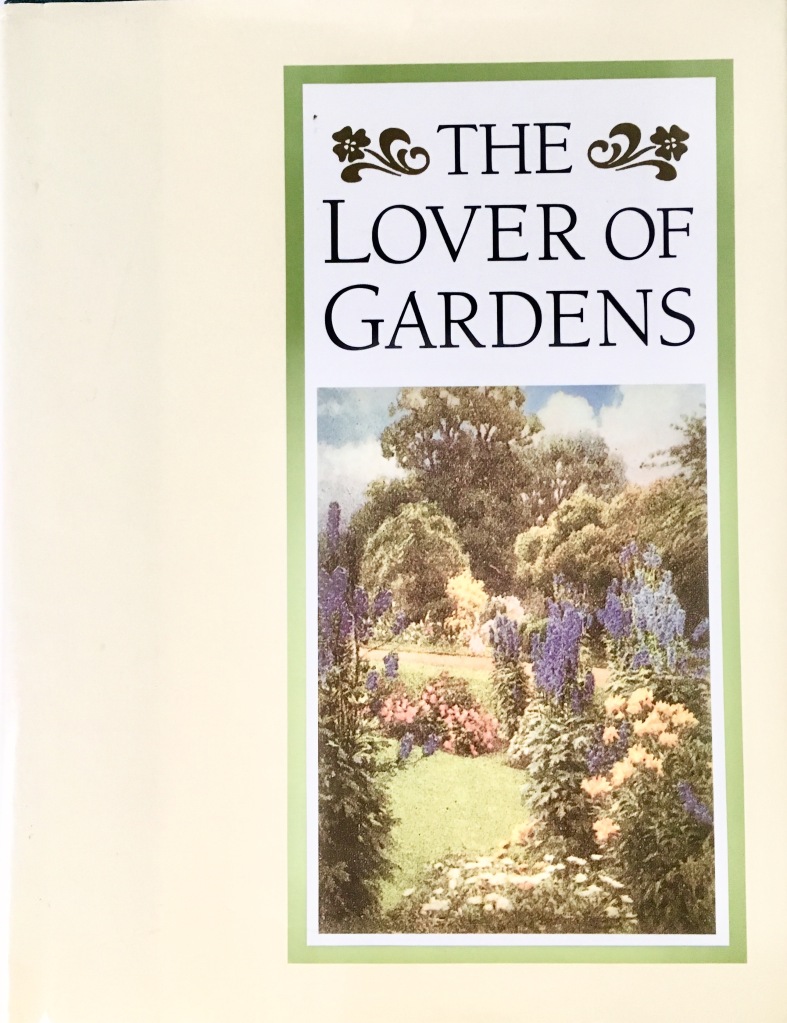
Several years ago, browsing at a local swap meet, a friend happened upon a book titled The Lover of Gardens. Well aware of my uncanny obsession with gardens – with sweet-smelling flowers, berry bushes, and trellises adorned with vines – my friend graciously gifted me the book and I haven’t parted with it since, even after moving homes four times (two of which required me to cross the planet with only two suitcases in tow). Though the reading experience is by no means an acceptable substitute to wandering a real garden, The Lover of Gardens has more than once calmed and comforted my listless soul.

img_1281

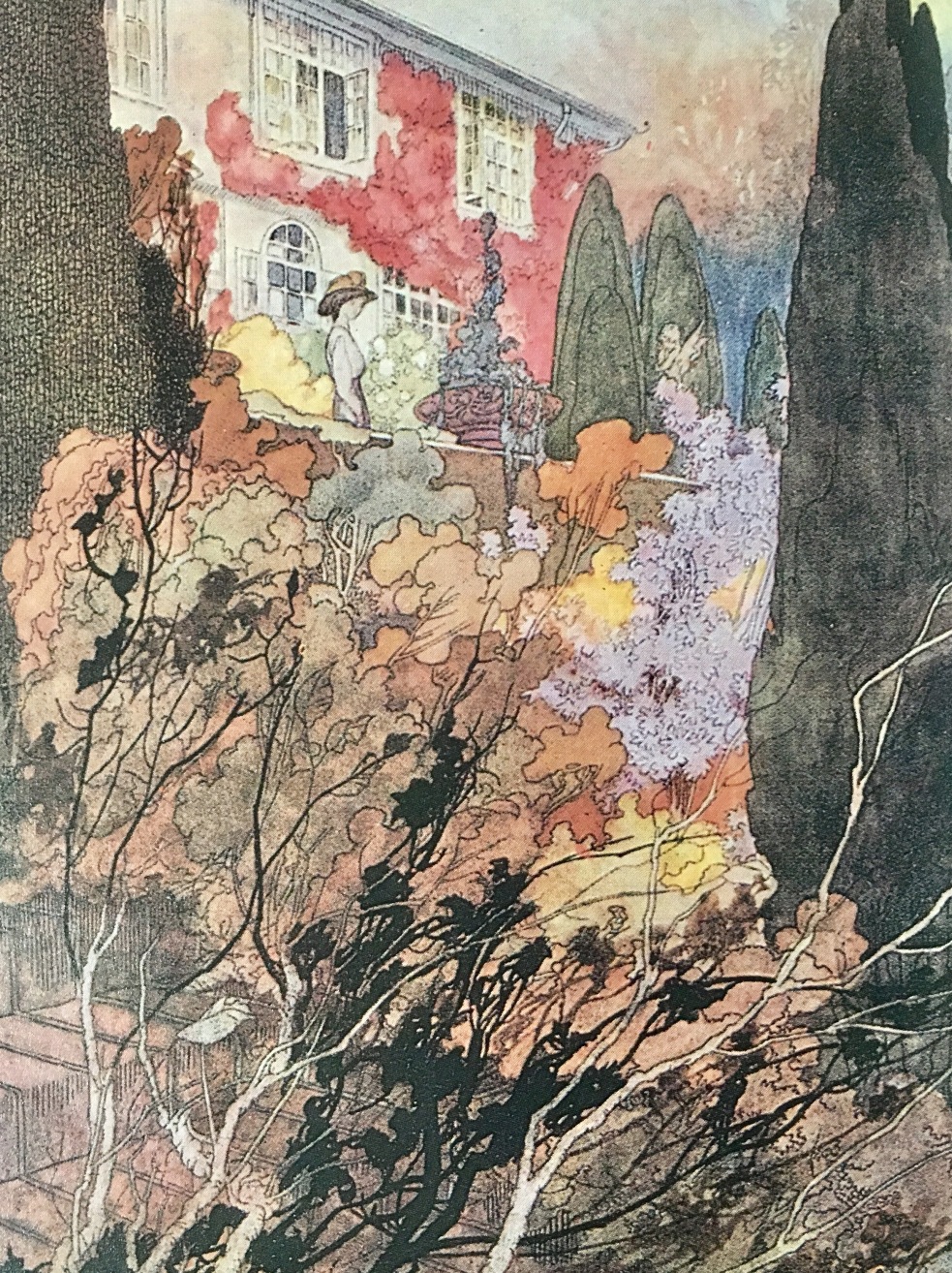
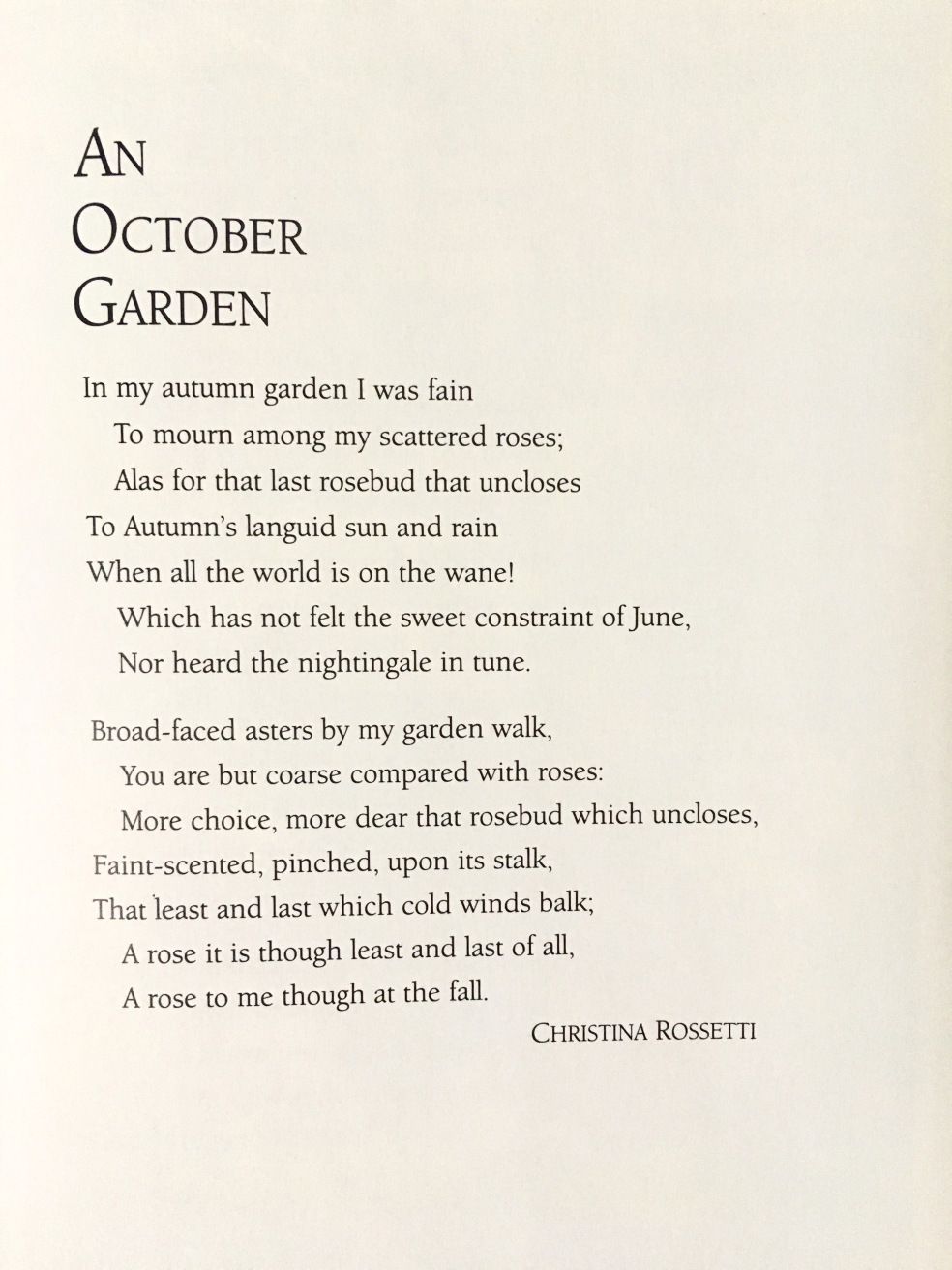
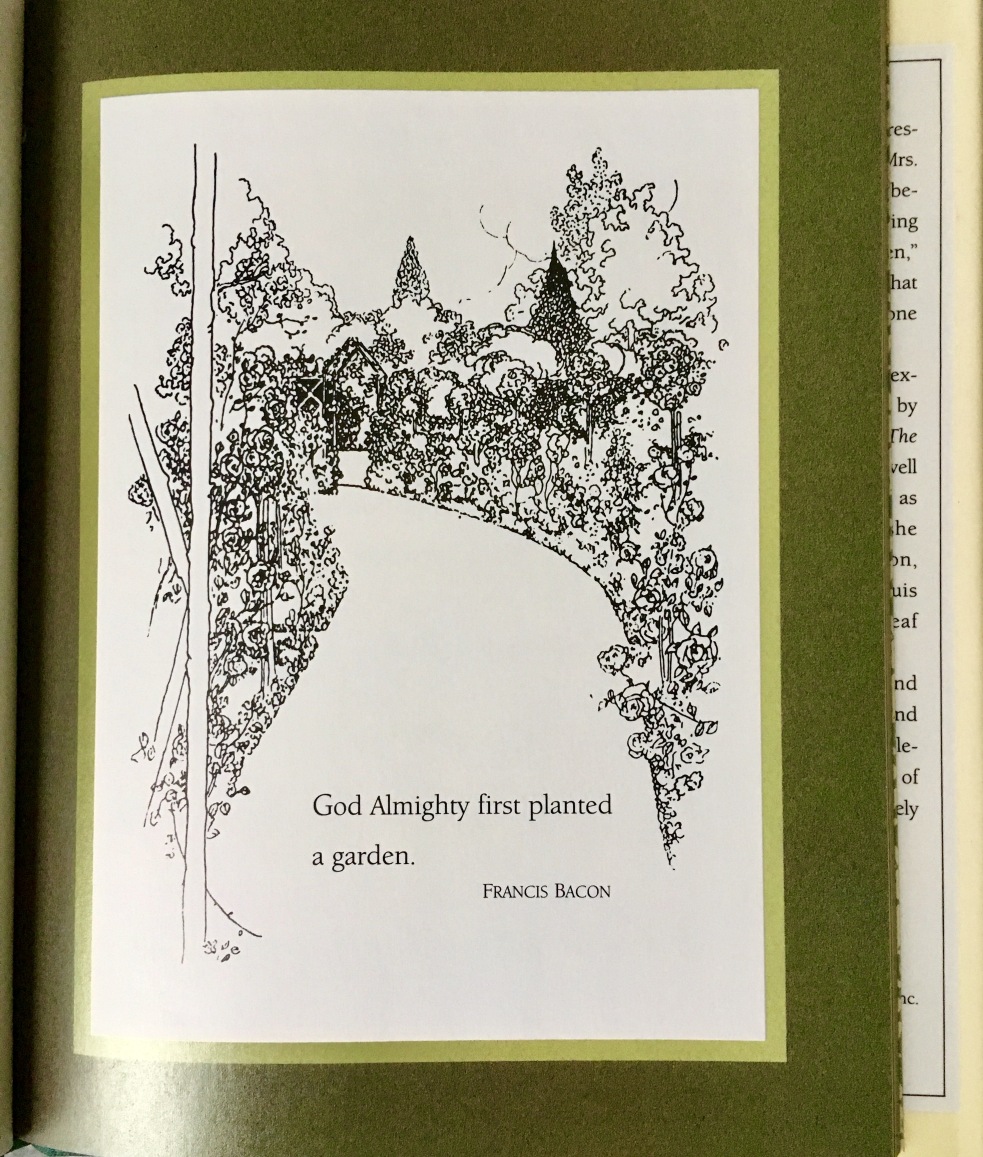
Compiled by Gail Harvey and designed and illustrated by Liz Trovato, the book is an elegant and enchanting collection of quotes, poems, and essays, authored by both well and little known persons who share an adoration for the garden and its transcendental ability to invigorate and restore. The authors’ ode-like descriptions and love letters to the garden’s incomparable beauty, virtue, and grace elucidate man’s ingrained, deep-rooted bond and unparalleled connection with the natural world, translating into words the delightful, pleasurable feeling that comes from standing, wandering, resting, etc. in a garden.

“I look upon the pleasure which we take in a garden as one of the most innocent delights in human life. A garden was the habitation of our first parents before the Fall. It is naturally apt to fill the mind with calmness and tranquility, and to lay all its turbulent passions at rest. It gives us a great insight into the contrivance and wisdom of Providence, and suggests innumerable subjects for meditation. I cannot but think the very complacency and satisfaction which a man takes in these works of Nature to be a laudable if not a virtuous habit of mind.”

– from “The Pleasure of a Garden” by Joseph Addison

img_1289

img_1287
Trovato’s accompanying illustrations add to the book’s quintessential allure and enhances its pleasing, gladdening, and gratifying qualities.

An adoring tribute to “the purest of human pleasures…the greatest refreshment to the spirit,” The Lover of Gardens will continue to be one of my most faithful hardcover companions, and an honorable supplement to the garden I will one day call my own.

img_1292

A Little Wisdom – An Endearing Selection of “Words From The Wise” from Centuries Past

In search of something fresh to sample while perusing the poetry shelf at a local used book store, I happened across a well-worn hardcover titled “Words From The Wise: Centuries of Proverbs to Live By.” Intrigued by its archaic quality and the charming illustrations on the front cover, I brought it home – a decision that I’d regard as one of my best (which is at most a slight exaggeration). With multiple one sentence proverbs and a paired illustration per 8×11 page, Arthur Wortman’s collection of time-honored morsels of truth makes for a quick and visually-appealing read, which I took to be a refreshing breather from my usual densely-packed, prose laden book-buys.

IMG_1278

IMG_1279
As the sleeve rightly states, this is a book that entertains as it teaches the lessons of life. 

Though the proverbs were written decades, even centuries, prior, they stand true to the present (albeit with a few exceptions: i.e. “Having a good wife and rich cabbage soup, seek not other things.”) – their validity and relevance unimpressed by the passage of time.

Beyond their eternal importance and enduring applicability, proverbs (from the book, but in general too) wield language in a powerful way, possessing the ability to speak and chide and energize in as few words as possible. Their brevity, however, is not indicative of simplicity; each proverb deserves not to be skimmed, but carefully thought through with meaningful consideration to fully access and grasp its meaning, and take to heart its timeless truth. While the language is often figurative, even abstract, it presents valuable advice and profound wisdom in a manner that is accessible to all.

To supplement pages of proverbs both playful and heavy in tone, the book includes lightly colored illustrations by Fritz Kredel, a German-American wood-cutter and book illustrator whose work has appeared in numerous works, including Lewis Carroll’s “Alice’s Adventures in Wonderland” and Eleanor Roosevelt’s little-known children’s book, “Christmas.” Kredel’s attractive additions do the proverbs justice by bringing the pithy sayings to life, with a touch of good-natured humor.

IMG_1276

IMG_1280

IMG_1273

A whimsical, thought-provoking read, Arthur Wortman’s selection of “Words From The Wise” pays proper tribute to timeless tokens of wisdom that deserve to be preserved, remembered, and shared.

A Little About Tea – Sebastian Beckwith’s Guide to Tea and Tea-making

IMG_E1262

Before reading Sebastian Beckwith’s “A Little Tea Book,” I knew a little about tea – enough to pour water over a bag of Twinings at least – but nothing of its rich and impressive history, the 6 different types and their complexities, and on how to make a perfectly steeped cup.

At a humble 112 pages – including pictures and illustrations – Beckwith’s little known guide to the basics of tea-sourcing, making, and drinking is a handy, exceptionally informative resource for experienced and non-experienced tea-drinkers (and coffee-drinkers) alike. In addition to Beckwith’s facts and concise commentary, “A Little Tea Book” also includes charming illustrations by artist Wendy MacNaughton, complementing Beckwith’s lighthearted tone, attention to detail, and will to acknowledge the complexity of tea without overwhelming the reader.

IMG_E1263
A tiny sampling of teas – by Wendy MacNaughton

Despite its brevity and simplicity, Beckwith pays successful tribute to the expansive and complicated world of tea, offering – in his respectable and time-honored opinion – the most important information on tea’s past and present.

IMG_E1264

The final chapter of the book, and perhaps the most valuable, Beckwith offers a thorough explanation on how to make the perfect cup of tea, detailing the reasons on why to use loose leaf (never bagged), how much to use, the type of water to use and why, and the temperature at which to heat the water depending on the type of tea. After heating and pouring the water, Beckwith informs the reader to let the tea alone to steep, taste-testing the flavor once every minute. As for how long to steep to reach perfect doneness, Beckwith concludes by urging the reader “to rely on your tongue and not the clock” since every tea, and every person’s palette, is different.

With its delightful visuals and depth of information, Beckwith’s straightforward, yet intricately involved “A Little Tea Book,” invites its readers to delve deeper into all that tea has to offer, guiding them toward a deeper understanding, respect, and appreciation of the profundity behind the perfect of cup of tea.